
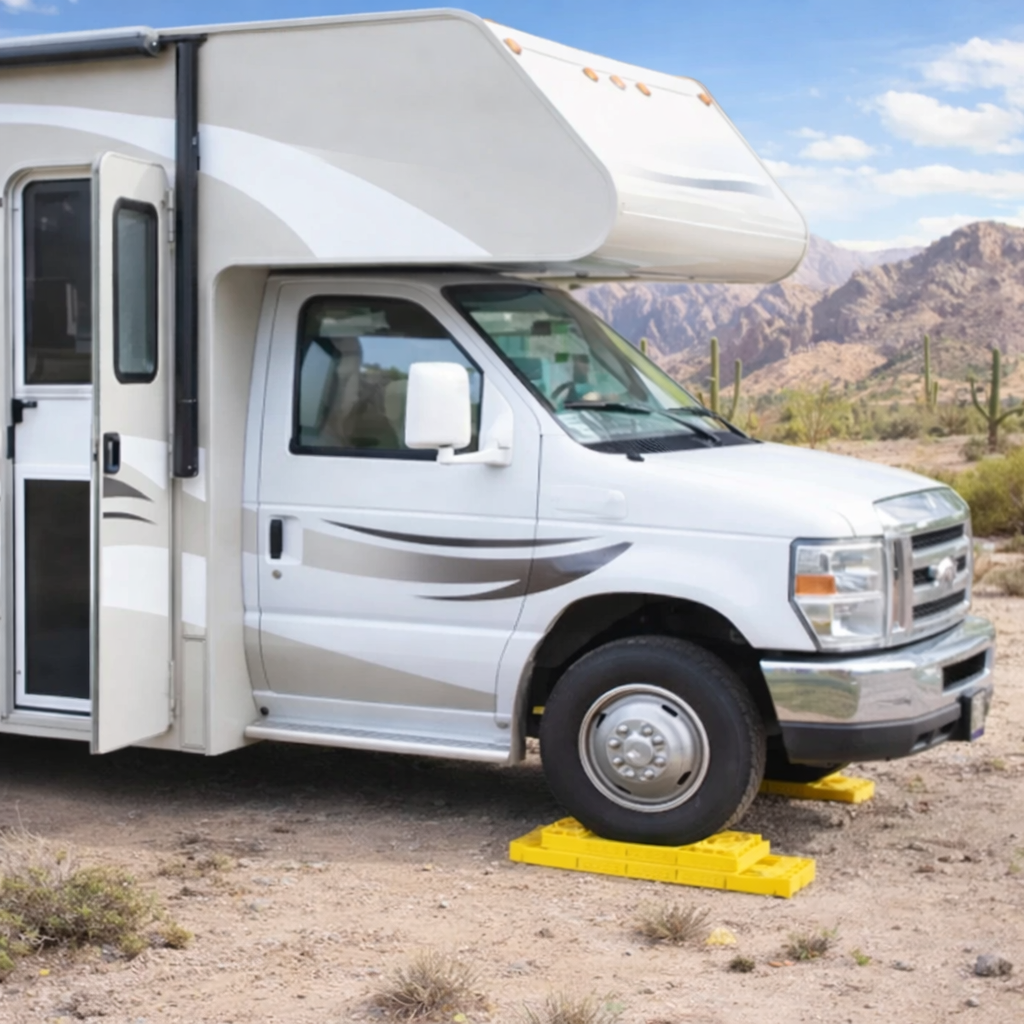
If you’ve ever spent a night in an unlevel RV, you already know why leveling blocks matter.
Your fridge doesn’t cool properly. Your shower doesn’t drain. Cabinet doors swing open. And worst of all? You feel like you’re sleeping on a hill.
Whether you’re renting an RV for the first time or you just bought your own, leveling blocks are one of the first pieces of RV gear I recommend. I use them with our rental units all the time, and I’ve learned pretty quickly which ones hold up — and which ones crack under pressure.
Let’s break down the best RV leveling blocks and which ones are worth your money.
1. Camco Heavy Duty Leveling Blocks

Best For: Travel trailers, fifth wheels, Class C RVs
Pros: Durable, stackable, lightweight, affordable
Cons: Can flex slightly under very heavy rigs
Overall: Best all-around choice for most RV owners and renters
Why I Like Them
I keep multiple sets of these in our rental fleet.
They’re lightweight, easy to stack like Lego blocks, and simple enough that first-time RV renters can figure them out without much explanation. If a product confuses renters, I stop using it.
Each block snaps into the next one, so you can build the height you need depending on how uneven the site is.
Real-World Performance
In real campground situations:
- They handle gravel well
- They work great on asphalt
- They’re solid on concrete pads
On soft ground, you may need to double up or use a larger base underneath.
I’ve had sets last several seasons with regular use. For the price, that’s solid value.
2. Andersen Hitches Camper Leveler

Best For: Travel trailers (especially tandem axle)
Pros: Extremely fast leveling, precise height control
Cons: More expensive, can crack under very heavy weight
Overall: Best for quick setup and solo travelers
Why It’s Different
Instead of stacking blocks, this system uses a curved ramp. You simply drive onto it until you’re level, then slide the chock underneath.
I’ll be honest — this is the fastest way to level side-to-side that I’ve used.
For beginners renting a travel trailer, this makes life easier. No stacking. No guessing.
Real-World Use
I’ve used these at uneven state parks where the slope looked intimidating. Being able to fine-tune the level by inches is a big advantage.
However:
- They cost more than block systems
- They’re not ideal for extremely heavy fifth wheels
- You need enough clearance between tandem axles
For smaller to mid-size travel trailers, they’re excellent.

Best For: Budget-conscious RVers
Pros: Affordable, widely available
Cons: Slightly less durable than Camco
Overall: Good entry-level option
These are similar in design to the Camco blocks. They interlock and stack.
I’ve used them before, and they work fine for lighter rigs. For heavy rental use, I’ve noticed they can wear down faster over time.
If you’re just starting out or renting occasionally, these will absolutely get the job done.
What to Look for in RV Leveling Blocks
Before you click “buy,” here’s what actually matters in the real world.
1. Weight Capacity
Always match the blocks to your RV type:
- Small travel trailer → Standard heavy-duty blocks
- Large fifth wheel → Double-check weight rating
- Class A motorhome → Heavy-duty ramp style or specialty pads
If you’re unsure, err on the stronger option.
2. Stackability
I prefer stackable systems for rental units because:
- They’re adaptable
- They work in more situations
- You can build exactly what you need
Ramp systems are faster but less versatile in extreme angles.
3. Storage
All three options above store easily in a bag.
This matters more than people think. Loose blocks rolling around your storage bay is annoying.
How Many Leveling Blocks Do You Need?
Here’s what I recommend from experience:
- Single axle trailer: 1 set (10 blocks)
- Tandem axle trailer: 2 sets
- Class C motorhome: 2 sets minimum
- Class A: Consider heavy-duty ramp systems + pads
I always carry extra. Campgrounds are unpredictable.
Common Beginner Mistakes
If you’re new to RV rentals or ownership, avoid these:
- Leveling front-to-back before side-to-side
- Forgetting to chock wheels
- Using blocks on unstable mud without a base
- Stacking too high without checking stability
Level side-to-side first. Always.
My Personal Recommendation
If I had to pick just one for most RV owners?
Camco Heavy Duty Leveling Blocks
They’re affordable, versatile, and beginner-friendly. I’ve trusted them across multiple rigs and rental seasons.
If you want the fastest leveling experience for a travel trailer?
Andersen Camper Leveler
It makes setup simple — especially if you’re camping solo.
Final Thoughts
Leveling blocks aren’t flashy RV gear.
But they absolutely affect your comfort, safety, and how well your RV systems work.
If you’re renting an RV for the first time, don’t assume the campground pad is level. Bring blocks. Learn how to use them. Practice at home before your first trip.
It’s one of those small things that makes a big difference in your RV experience.
And like I tell all our renters — the smoother your setup, the more you enjoy the trip.